Courage to Confidence: Rochelle's Sew Blessed Journey
 Geraldine Wilkins
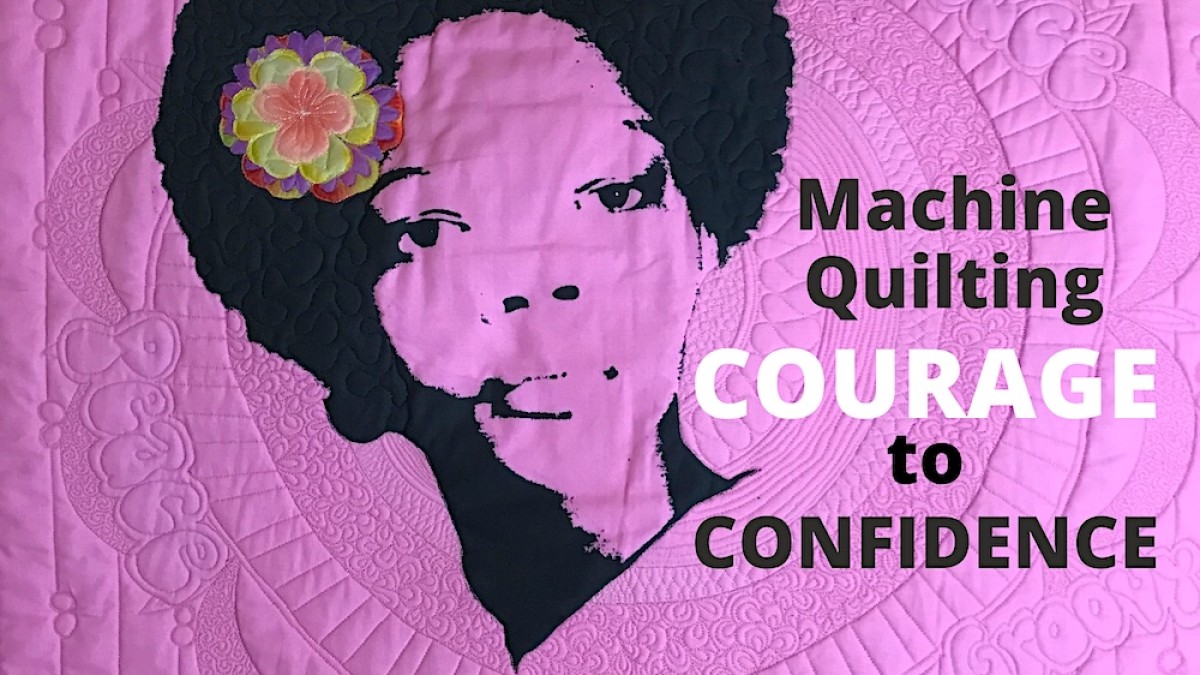
Rochelle did not begin this part of her quilting journey feeling confident. She had the courage to learn, practice and explore.
When I think about Rochelle Ward Cole’s quilting journey, one word keeps coming back to me.
Courage.
Yes, her confidence has grown. Yes, her free motion quilting has improved. Yes, she uses ruler quilting, thread, texture, and design planning in ways that show real growth.
But before the confidence came, there was courage.
Rochelle had the courage to learn how to use Bianca, her BERNINA Q20 sit-down longarm. She had the courage to look at her stitches honestly. She had the courage to see what needed work and face it directly. She had the courage to keep going when her quilting did not yet match the vision in her head.
Confidence does not always come first.
Sometimes courage gets you to the machine.
Then practice teaches your hands.
Then planning gives you direction.
And over time, confidence grows.
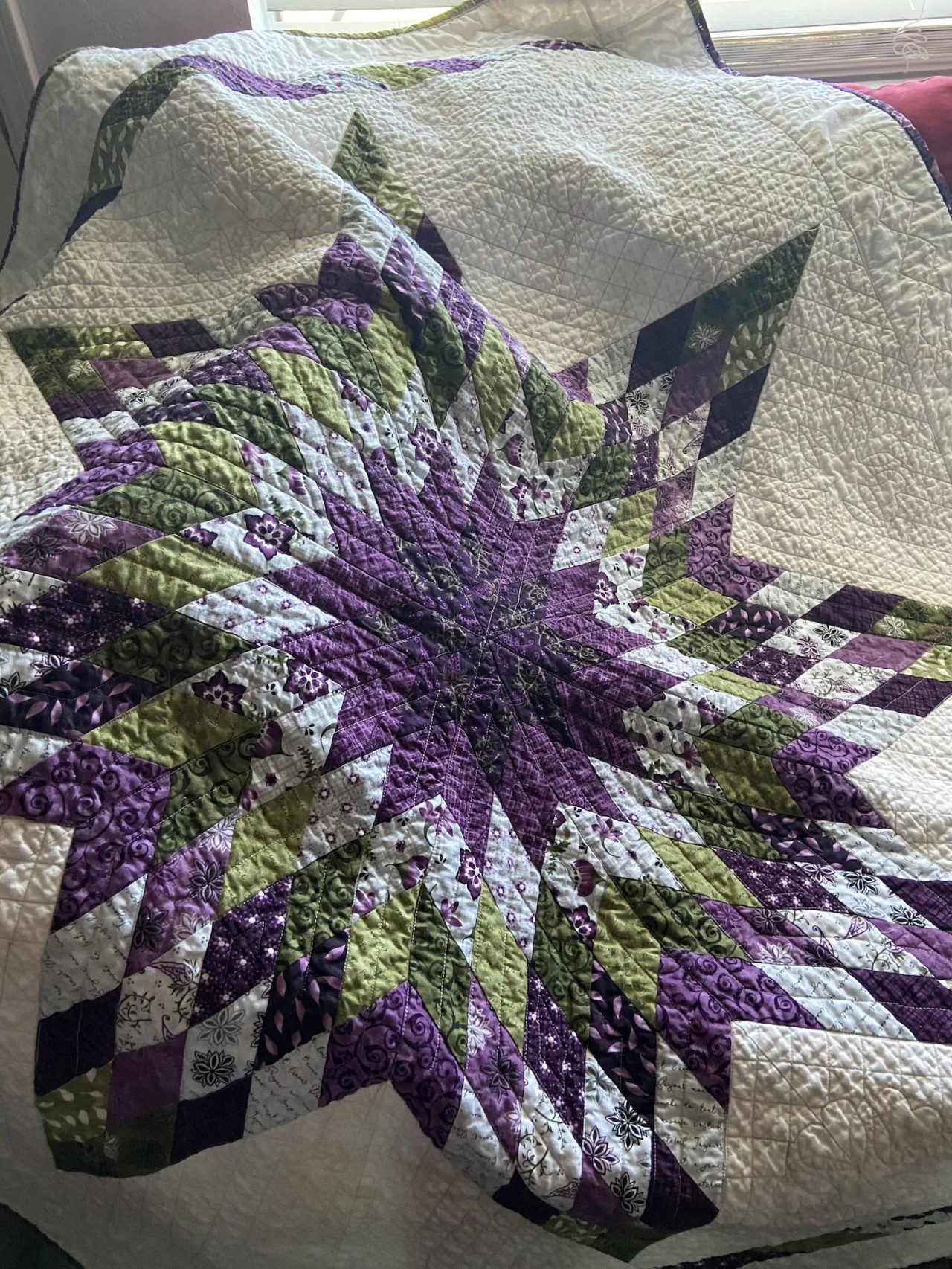
Rochelle’s Story
The journey from struggle to courage, from courage to confident learning, and from confident learning to creative freedom.
- She loved quilting, but not quilting the quilt sandwich.
She enjoyed choosing fabric and piecing quilt tops, but machine quilting felt intimidating. - She invested in a BERNINA Q20, then had to find the courage to use it.
A good machine helped, but it did not remove the fear by itself. - She chose focused learning instead of only guessing.
The Alphabet Design Free Motion course gave her a foundation for movement, machine setup, and design practice. - She learned to see mistakes as information.
She stopped hiding from the stitches and started using what she saw to improve. - She created playground pieces.
Her practice became useful projects like totes, bowl cozies, pillows, and reminders of growth. - She moved from technique to creative voice.
Free motion quilting and ruler quilting became tools for expression, not just skills to master. - Her quilts became blessings.
Through Sew Blessed Quilts by Rochelle, her work carries prayer, memory, comfort, family, and community connection.
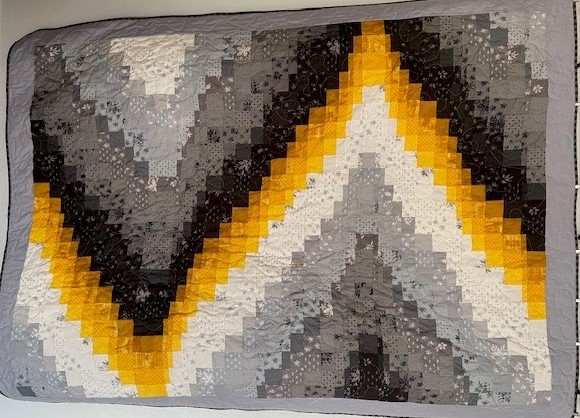
When Machine Quilting Feels Intimidating
Let’s be honest.
Many quilters love making quilt tops. We love the fabric. We love the color. We love watching the blocks come together.
Then comes the quilting.
That is where many quilters pause.
Rochelle understood that feeling. She had quilt tops waiting to be finished. She wanted them to be used and loved, but she did not want to keep sending everything out to be quilted.
So she invested in Bianca, her BERNINA Q20 sit-down longarm, as a gift to herself.
Then Bianca sat.
I love that Rochelle was honest about that because many quilters have a version of this story. Maybe it is a machine. Maybe it is a ruler foot. Maybe it is a rulerwork tool. Maybe it is a stack of quilt tops waiting because you are not sure what quilting design to use.
A tool can help you, but a tool does not do the learning for you.
At some point, you have to sit down and begin.
That takes courage.
Courage Came Before Confidence
In my conversation with Rochelle, we talked about confidence.
I told her that confidence is often misunderstood. Confidence is not, “Every stitch I make is perfect.” Confidence is not, “Every design choice works exactly the way I planned.”
Confidence is trusting yourself in the process.
That definition fits Rochelle.
She learned to trust herself enough to try. She learned to trust herself enough to notice what was not working. She learned to trust herself enough to keep learning instead of quitting.
That is a key lesson for free motion quilting, ruler quilting, and machine quilting in general.
You may not feel confident when you first lower the feed dogs.
You may not feel confident when you first move the quilt under the needle.
You may not feel confident when you first hold a ruler against a ruler foot and try to keep the stitching steady.
But courage can get you started.
Confidence grows while you practice.
How the Alphabet Design Course Helped Rochelle Build a Foundation
The Alphabet Design Free Motion course gave Rochelle a foundation she still uses today.
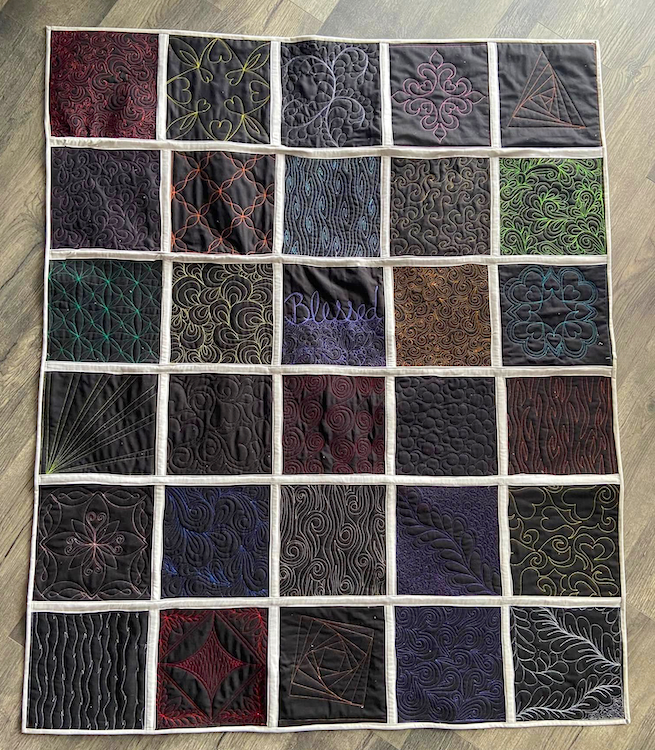
The course helped her learn free motion quilting through familiar shapes and movements. Instead of beginning with complicated free motion quilting designs, the Alphabet course begins with letters and simple shapes that help build hand movement, muscle memory, and design confidence.
That matters for quilters who ask:
How do I start free motion quilting?
Start with learning how to setup your machine for success. It’s a key video lesson in the Alphabet course.
Start with shapes your hands already understand.
Start with simple free motion quilting designs that can grow over time.
For Rochelle, the Alphabet course became more than a class she completed. It became a springboard. She still uses alphabet-based design ideas, but now she adds her own twist. That is what the course is supposed to do.
Sometimes the twist works.
Sometimes it does not.
Either way, she learns.
That is how beginner free motion quilting practice grows into creative freedom.
Courage Means Looking at the Stitches
One of the strongest parts of Rochelle’s story is that she does not hide from the work.
She has learned to look directly at her stitches. If something is off, she wants to see it. If a thread choice shows every wobble, she uses that information.
That is courage.
Blending thread can feel safer. It hides small mistakes. It softens the evidence.
But contrasting thread tells the truth.
It shows where your free motion quilting movement is improving.
It shows where your stitch length needs attention.
It shows where your ruler quilting spacing is working.
It shows where you need more practice.
And it also shows where you should pat yourself on the back.
Courage does not say, “This is awful.”
Courage says, “Now I can see what to work on.”
That is the mindset that helps a quilter grow.
Practice Does Not Have to Look Like Practice
Rochelle’s practice is not formal.
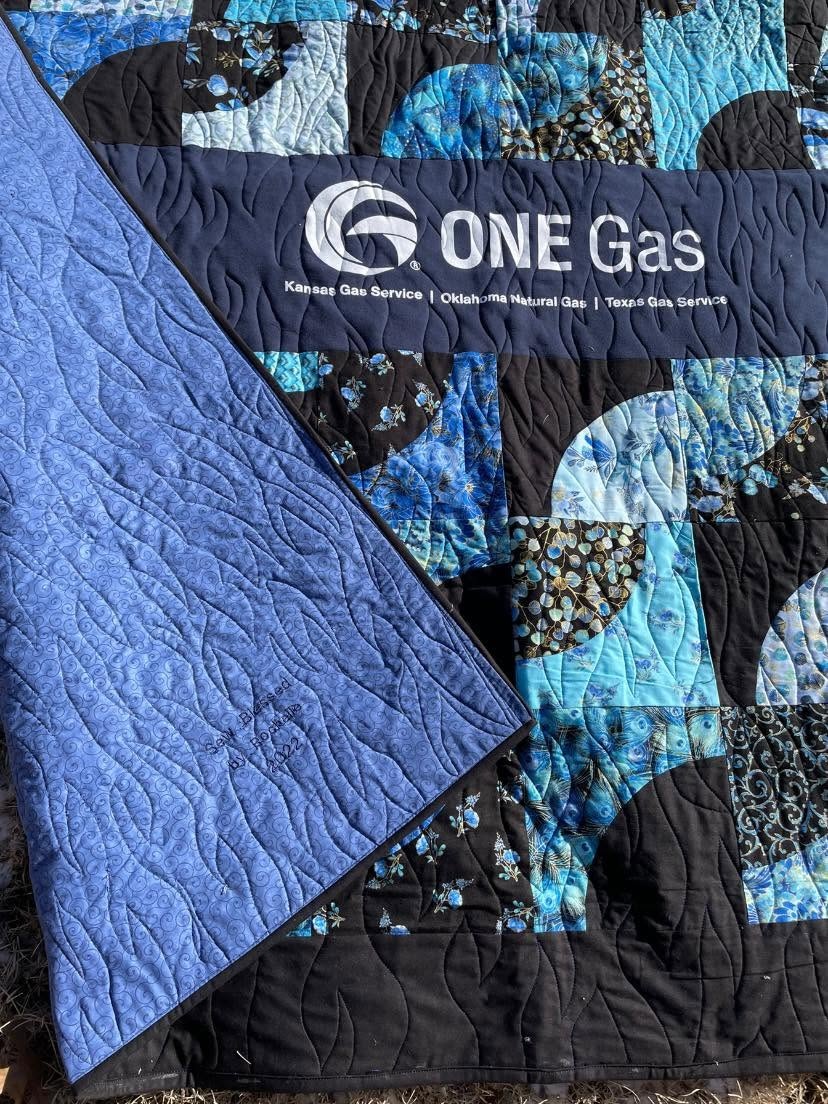
She uses low-pressure “playground” pieces. Sometimes she tests thread, batting, color, ruler quilting techniques, or free motion quilting designs just to understand how they behave.
And I love this part.
Her playground pieces are not wasted.
They become totes, bowl cozies, pillows, potholders, or reminders of what she learned.
That is important for the quilter who wonders, “Am I wasting fabric and thread while I practice?”
No, not if you are learning.
Practice is how machine quilting confidence grows.
Practice is how your hands learn movement.
Practice is how rulerwork begins to feel less awkward.
Practice is how your quilting design library expands.
You do not need every practice piece to become a masterpiece.
You need it to teach you something.
How Do You Choose Quilting Designs for a Quilt?
Rochelle’s growth also shows up in how she makes quilting decisions.
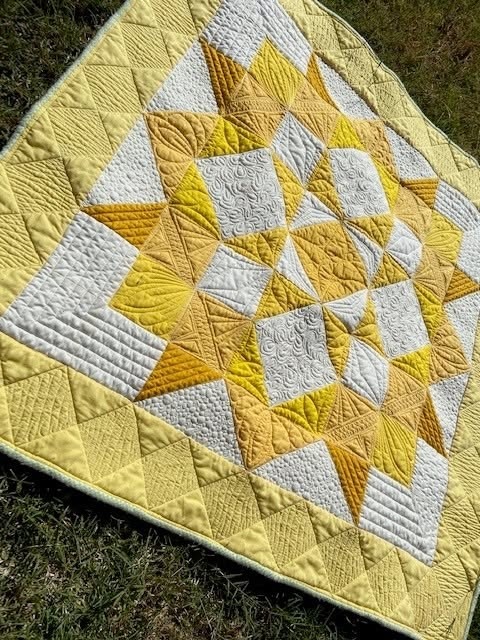
She no longer treats every quilt the same. Before choosing quilting designs, she thinks about the purpose of the quilt, the piecing, the color story, and whether the quilt needs all-over quilting or custom quilting.
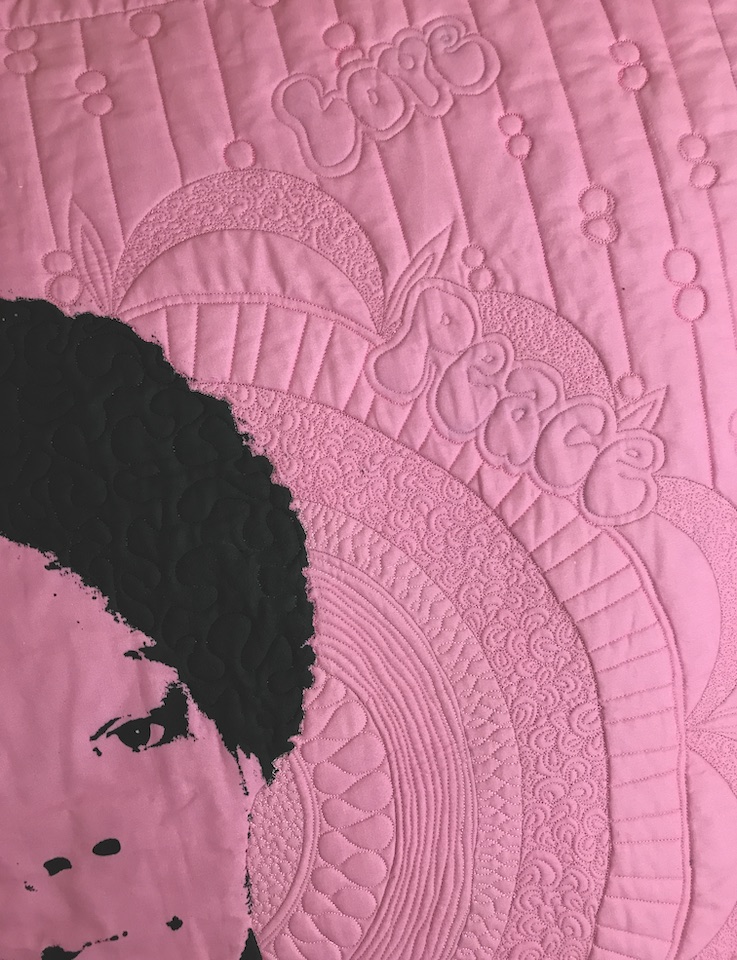
That is growth seen in the Beautiful Sister fabric panel she quilted. Now, she plans, tests and looks forward to learning from the experience.
Many quilters learn designs but still struggle with where to place them. You may know how to stitch a swirl, loop, feather, ruler line, echo, or meander. But when the quilt top is finished, you still freeze.
That is where planning matters.
Make a Quilting Plan Before You Stitch
The Pathways course helps quilters learn how to use the Ultimate Machine Quilting Planner to create a quilting plan.
A quilting plan helps you answer questions like:
- Where should I use free motion quilting?
- Where would ruler quilting add structure?
- Should this quilt have custom quilting or an all-over design?
- How do I choose quilting designs for borders, blocks, and negative space?
- How do I place designs so the quilting supports the quilt instead of fighting it?
Pathways helps quilters move from guessing to making thoughtful design choices.
That does not mean every decision will be perfect.
It means you are learning to trust yourself in the process.
That is confidence.
Free Motion Quilting and Ruler Quilting Can Work Together
Rochelle now uses both free motion quilting and ruler quilting.
Some projects are fully free motion. Some combine free motion and rulerwork. That mix gives her more options.
Together, they help a quilter create stronger machine quilting designs.
For quilters who want to learn ruler quilting techniques, the STITCHLINE ruler is a helpful rulerwork tool. It supports uniform spacing, line work, and echoes. It is useful for quilters learning rulerwork on a domestic machine, sit-down longarm, or frame.
The goal is not to use every technique on every quilt.
The goal is to have a variety of skills and techniques and courage to choose what the quilt needs.
From Technique to Creative Voice
One of the strongest parts of Rochelle’s story is that technique is no longer the whole focus.
She is not only asking, “Can I stitch this design?” She is thinking, “What quilting design and technique will I select for this quilt?”
That matters.
Her Beautiful Sister panel is a clear example. Rochelle had a vision. She wanted a 70s feeling. She wanted words, movement, texture, and personality. She worked through the challenge of getting what was in her head into fabric and thread.
That is not just technique. That is creative voice.
And creative voice takes courage.
It takes courage to quilt from a vision.
It takes courage to try something that may not work.
It takes courage to stop, rethink, and keep going.
And when it works, you see growth in a new way.
Quilting as Prayer, Memory, and Blessing
Rochelle’s quilts are not only about skill. They carry prayer, hope, memory, and love.
Her studio is a place of peace. Quilting is part of how she feels calm and grounded. Her quilts often have names and stories connected to songs, scripture, grief, family, encouragement, and love.
Her quilts are meant to bless people. They are meant to be used. They are meant to be wrapped around shoulders, dragged by grandchildren, carried through life, and loved until they show wear.
That is a beautiful reminder.
A quilt does not have to be perfect to be powerful.
A quilt can comfort.
A quilt can honor.
A quilt can tell a story.
A quilt can become a blessing.
Quilts in Community: Breaking Bread Exhibit
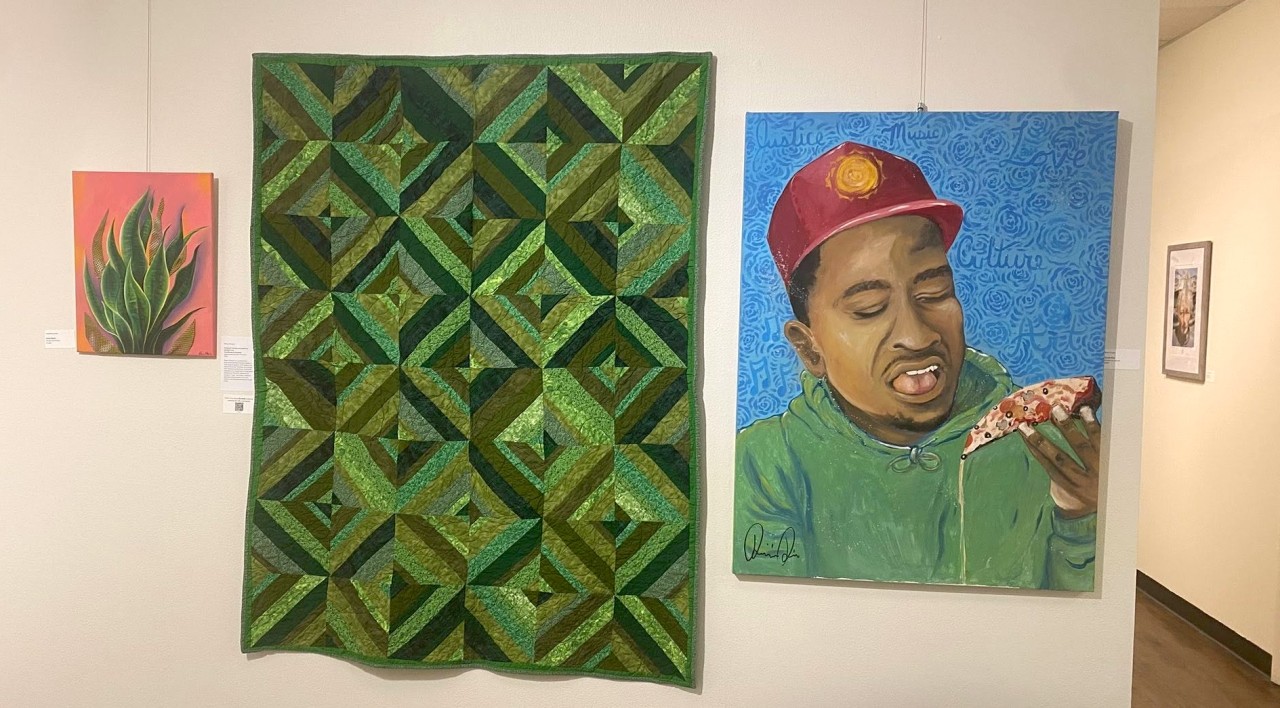
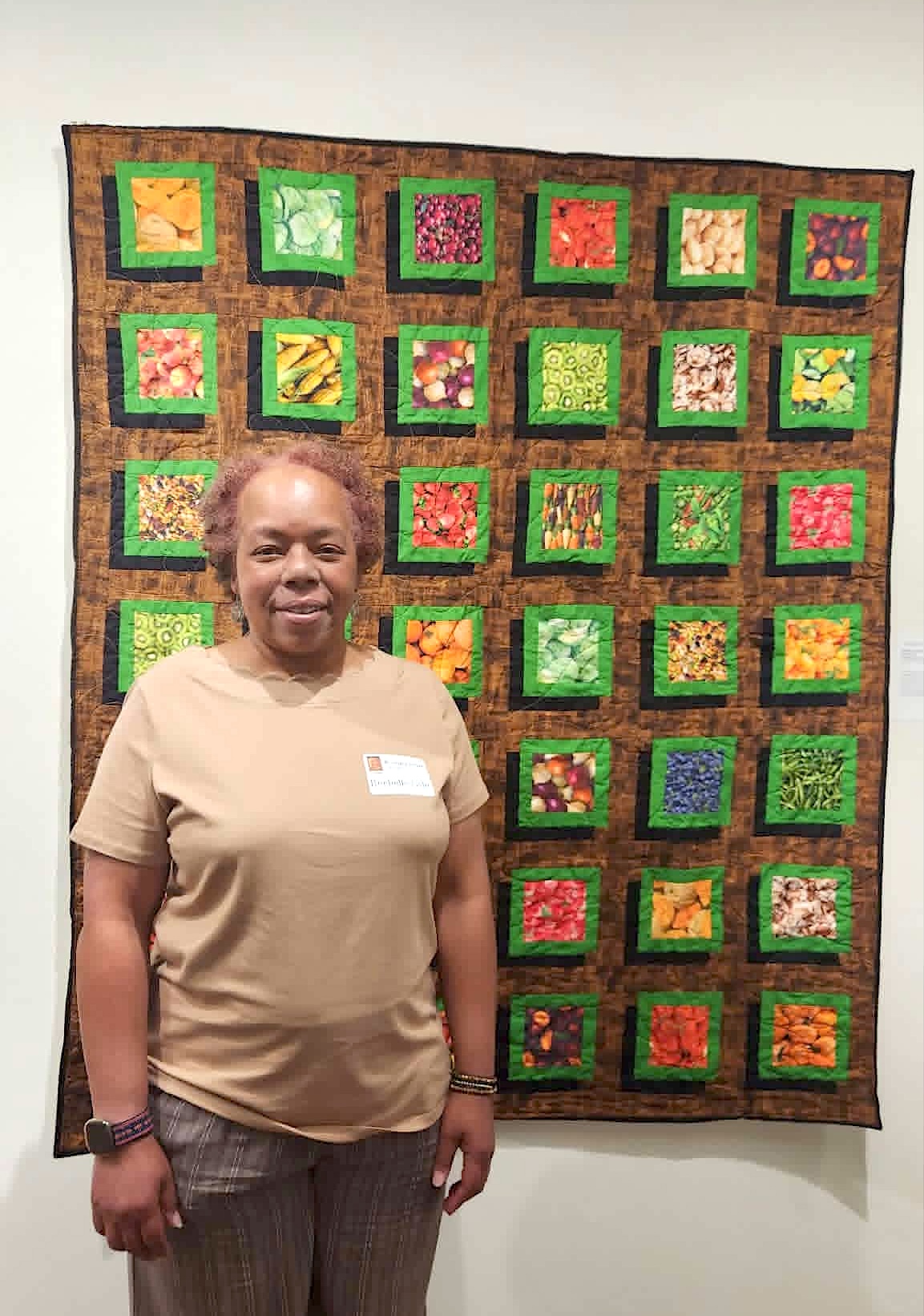
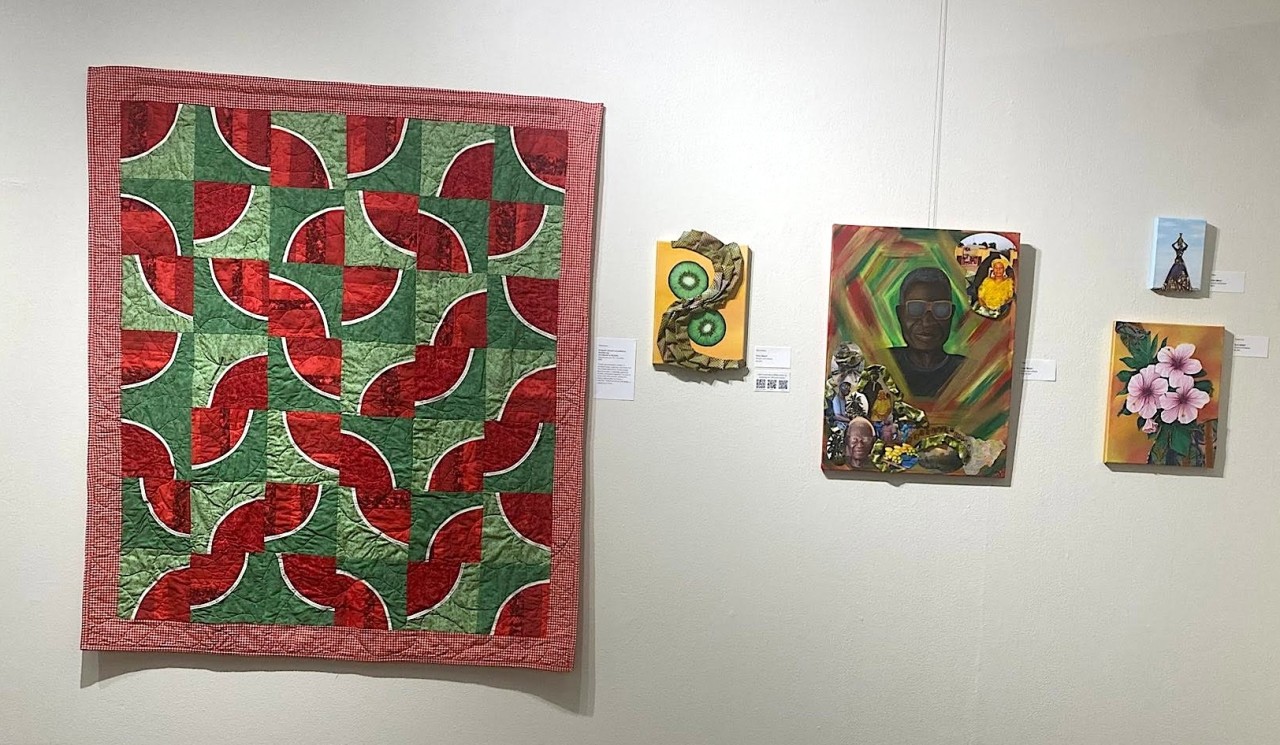
Rochelle recently had quilts displayed in the Breaking Bread exhibit at the Paseo Arts & Creativity Gallery. That experience helped her see her work in a new way.
Her quilts were displayed alongside her daughter’s artwork, which made the moment even more meaningful.
They can live on beds and couches.
They can also live on gallery walls.
They can strengthen a mother daughter bond.
They can carry family history, culture, memory, faith, creativity, and healing.
Don’t Chase Perfection. Build Courage.
Rochelle’s encouragement to other quilters is clear: keep going.
Do not chase perfection. Chase growth. Growth takes courage.
It takes courage to learn how to use a new machine.
It takes courage to try free motion quilting when your hands feel awkward.
It takes courage to use a rulerwork tool like the STITCHLINE ruler and admit that holding the ruler, moving the quilt, and keeping the spacing consistent takes practice.
It takes courage to make a quilting plan and still adjust when the quilt asks for something different.
It takes courage to see your mistakes directly and squarely without turning them into shame.
That is the kind of courage Rochelle models.
She wants to learn, do her best and then do better.
See more quilts and learn more about Rochelle in her Student Spotlight. Also visit her on the Sew Blessed Quilts By Rochelle Facebook page.
Your Next Step: Courage to Confidence
If Rochelle’s story sounds familiar, your next step may be to stop waiting until you feel confident and begin with courage.
Explore the Living Water Quilter confidence courses here:
https://courses.livingwaterquilter.com/courses
Start with the Alphabet Design Free Motion course if you want a clear foundation for free motion quilting, machine setup, movement, and design practice.
Use the STITCHLINE ruler if you want to build ruler quilting and rulerwork skills with more structure, spacing, and control.
Take the Pathways course if you want to learn how to use the Ultimate Machine Quilting Planner to create a quilting plan and decide where designs belong before you sit down to stitch.
You do not need to feel ready for the whole journey.
Start with the next brave step.
Courage gets you to the machine.
Practice teaches your hands.
Planning gives you direction.
And over time, confidence grows.
That is how you move from learning technique to quilting with freedom.
That is how your quilts become more than finished.
They become yours.
